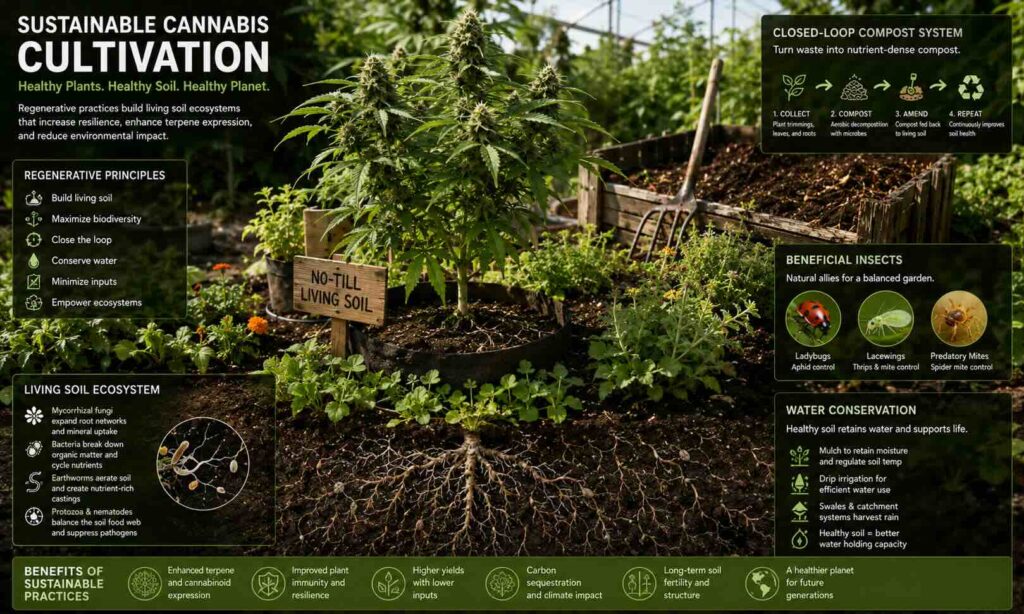
Organic cannabis cultivation has gained significant popularity among growers who want to focus on natural growing methods and sustainable gardening practices. Rather than relying heavily on synthetic inputs, organic cultivation emphasizes healthy soil, balanced ecosystems, and long-term environmental stewardship. While different growers may apply organic principles in different ways, the overall objective remains the same: creating a thriving environment where plants can develop naturally and consistently.
The growing interest in organic cultivation reflects a broader movement toward sustainable agriculture and environmentally conscious growing techniques. Understanding the principles behind organic cannabis cultivation helps growers make informed decisions about how they manage their gardens and support plant health throughout the growing cycle.
The Foundation of Organic Growing
At the heart of organic cultivation is the idea that healthy plants begin with a healthy growing environment. Rather than focusing exclusively on feeding the plant, organic growers often focus on supporting the ecosystem surrounding the plant, particularly within the root zone.
Organic cultivation generally emphasizes natural processes, biological activity, and balanced growing conditions. By creating an environment where beneficial organisms can thrive, growers encourage long-term soil health and sustainable plant development.
This holistic approach views cultivation as an interconnected system rather than a collection of isolated inputs.
Strong foundations often lead to more consistent results over time.
The Importance of Soil Health
Soil plays a central role in many organic cultivation systems. Healthy soil supports root development, water retention, nutrient cycling, and biological activity. Organic growers frequently invest significant effort into building and maintaining soil quality because it influences nearly every aspect of plant development.
A biologically active growing medium can help create a more balanced root environment and support long-term cultivation success. Many growers view soil health as one of the most valuable assets in an organic garden.
Healthy roots and healthy soil often develop together.
The condition of the growing medium influences plant performance throughout the entire life cycle.
Environmental Sustainability
One of the major benefits associated with organic cultivation is its emphasis on sustainability. Organic growing practices often encourage responsible resource management, reduced environmental impact, and long-term ecological balance.
Growers who adopt organic principles frequently focus on improving efficiency while maintaining environmental responsibility. Sustainable cultivation practices can contribute to healthier growing environments and support long-term agricultural productivity.
As interest in sustainable agriculture continues to expand, organic cannabis cultivation remains an important area of development within the industry.
Environmental awareness has become a key consideration for many modern growers.
Supporting Plant Health Naturally
Organic cultivation often emphasizes prevention and balance rather than reacting to problems after they occur. Healthy growing conditions, appropriate environmental management, and careful observation all contribute to plant development.
Growers interested in exploring modern CBD cannabis genetics can learn more through Ministry of Cannabis. Understanding the relationship between genetics and cultivation methods helps growers create more effective growing strategies.
Many organic growers focus on creating stable conditions that encourage plants to develop naturally throughout the cultivation cycle.
Consistency remains one of the most important principles in any cultivation system.
Learning and Continuous Improvement
Organic cannabis cultivation is often viewed as a long-term learning process. Because each growing environment is unique, growers frequently refine their techniques through observation, record keeping, and practical experience.
Understanding how soil health, environmental conditions, and cultivation practices interact can help growers make more informed decisions over time. Small improvements applied consistently often contribute to meaningful long-term progress.
Additional information regarding CBD research and related topics can be explored through https://theconversation.com/fr/topics/cbd-20744.
Continuous learning remains one of the most valuable tools available to cultivators seeking sustainable success.
Final Thoughts
Organic cannabis growing focuses on creating healthy environments that support natural plant development. By emphasizing soil health, sustainability, environmental balance, and long-term cultivation practices, growers can build systems that promote consistency and resilience.
Whether cultivating on a small scale or managing larger projects, understanding organic principles helps growers develop a deeper appreciation for the relationship between plants and their environment. The continued growth of organic cultivation reflects the increasing importance of sustainability within modern cannabis agriculture.